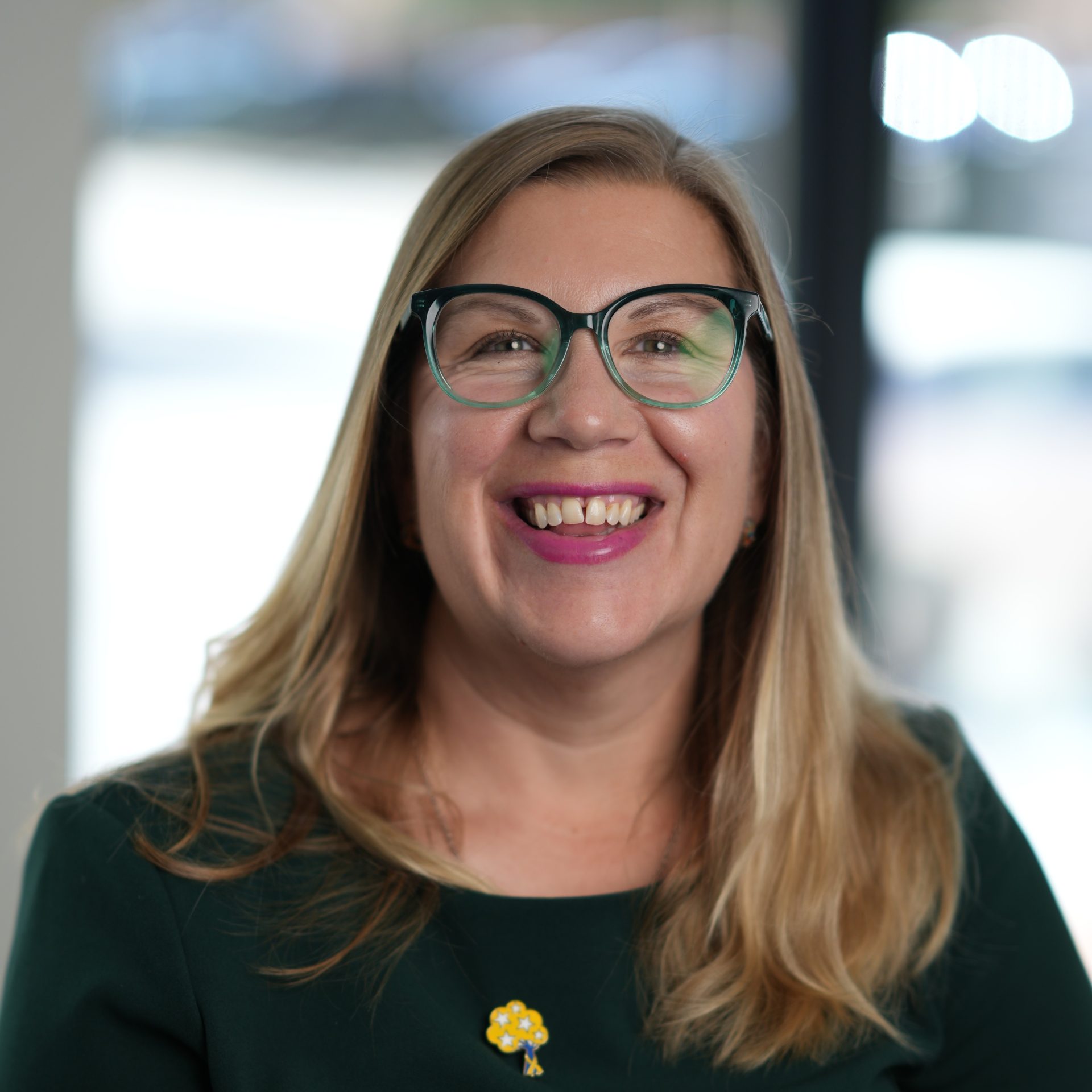
Meg Graves
“It’s not the home, it’s not the neighborhood, it’s not a physical place, it’s my little family my husband and I created over 16 years ago”
At WeVett, our work centers around helping military families find and finance their homes, but we know that the meaning of home reaches far beyond four walls. It’s shaped by transition, new traditions, and the people who make it all possible.
Few understand this better than the spouses who live it every day.
In honor of the Armed Forces Insurance 2026 Military Spouse of the Year, we’re sharing seven stories, one from each branch’s finalist, offering a deeper look at what “home” really means in the midst of military life.
Their Story

Meg Graves has lived in enough houses to know that home moves with you.
So far, Meg, her husband, and their three kids have navigated seven PCSes, taking them from the East Coast to Nebraska to the Pacific Northwest, and several stops in between. With each move, they bring art collected from stations along the way, serving as visual reminders of the waypoints they've experienced and the world they’ve explored. The locations change, but what doesn’t is who’s along for the ride.
“It’s not the home, it’s not the neighborhood, it’s not a physical place,” Meg states. “It’s my little family my husband and I created over 16 years ago.”

For Meg, home lives in the extraordinary comfort of ordinary moments. Snuggling on the couch or hours in the car on the way to somewhere new. Stumbling onto a restaurant or a hiking trail or a stretch of coastline that none of them would have found if the Navy hadn’t sent them there. And a togetherness that comes with intentionality.
She and her husband have made it a point to teach their children that siblings can be their first and most reliable friends. This lesson has mattered more than most, given how often everything else around them has changed.
She wishes more people understood this about the experience of growing up as a military child. Most grow up without a hometown to anchor them. There’s no single street, school, sports field, or shop that holds the whole shape of their childhood. Home, for them, is fluid. It shifts. And that’s not a loss to be mourned so much as it is a difference to be celebrated. This lifestyle teaches you early on that belonging isn’t a place you find, it’s something you build.
This is also something Meg has learned as a military spouse. As she puts it, “Home is who I share it with. It’s knowing I’m loved for exactly who I am and intentionally building that love into those we surround ourselves with.”

Meg is a Stage 3 triple-negative breast cancer survivor, mother of two children with special needs, and a former special educator–experiences that collectively shaped both what she needed from her community and what she became determined to provide. She serves on the advisory board for the Military Family Advisory Network, SME/EFMP SPED Educator Partners in PROMISE, and has spoken before Congress on behalf of military families navigating complex medical and educational systems. Her work is personal, and it always has been.
Her approach to community is simple. When she arrives somewhere new, Meg unpacks the kitchen and the kids’ bedrooms first. Then, she gets to work finding her people.
Her advice to any spouse heading into a move is to stop waiting for community to come to them, and start being proactive. “If it doesn't exist, how can you help build it for others who might feel the same way?” she offers. She recommends holding “office hours” at a park or coffee shop, putting yourself out there, or simply being the smiling face someone needs to see. Chances are, there are others just waiting to join you!
Because at the end of the day, intentionality is what “home” has always been about for Meg. It’s not the place you arrive at, it’s what you build once you get there.
Learn more about Meg’s work here.
In Their Own Words
When you think about “home,” what does that word mean to you right now?
Home is who I share it with, it's my kids and it's my husband. It's our friends who support us. It's our family who cheers us on from afar. It's knowing I'm loved for exactly who I am and intentionally building that love into those we surround ourselves with.
How has PCSing shaped or changed the way you think about home?
PCSing has shifted the way I think about home. It's not our house; It's not a town; It's not fixed in one place. When I think of Home, it's something we've taken the time to build and intentionally create. It's not the home, it's not the neighborhood, it's not a physical place. It's my little family my husband and I created over 16 yrs ago. It's snuggling on the couch, it's countless hours in the car driving to our new duty station. It's the sharing of new experiences exploring new-to-us places along the way. It's intentionally teaching our children that siblings can be your first friends.
What’s something you wish more people understood about what “home” looks like for military families?
Home for military families changes so often, sometimes yearly or less. It's fluid, and our children grow up without ever truly having a hometown experience to anchor them in one place.
What’s one thing you always do to make a new place feel like home?
I always unpack our kitchen and the kids bedrooms first! We collect art from each duty station and our walls are filled with visual reminders of what a glorious and beautiful world we live in.
What’s one piece of advice you’d give a spouse heading into their next PCS?
Home is something YOU create. Don't be afraid to create and develop the community you need and desire. Invite people in. Hold "office hours" each week at a park or coffee shop for people to stop by and join you. Be ok with putting yourself out there. Be the smiling face new people need! If it doesn't exist, how can you help build it for others who might feel the same way?
Every Military Family Deserves a Great Agent
We match you with experienced, military-savvy real estate agents wherever your orders take you.